
A break-through in cancer research
Chimeric antigen receptor (CAR) – modified T cells
A break-through in cancer research
Chimeric antigen receptor (CAR) – modified T cells
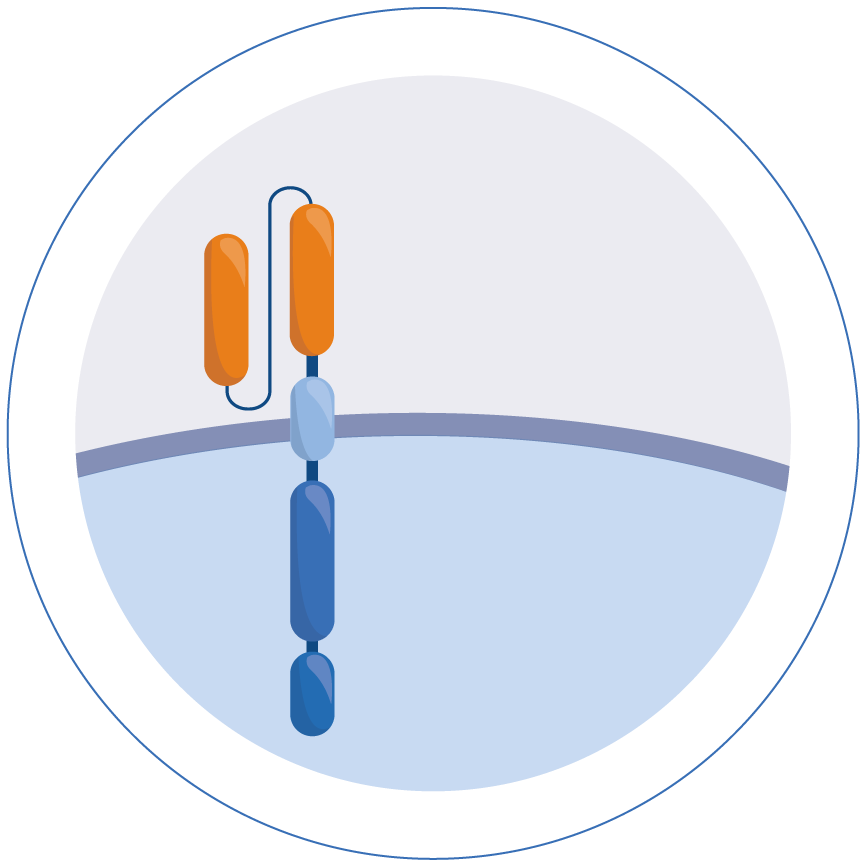
What is their function?
Targeted immunotherapy
CARs redirect T cells to recognize tumor cells. They bind to surface molecules expressed on tumor cells independent from HLA and allow combining the exquisite specificity of an antibody with the potency and durability of a cellular immune response.
What is their function?
Targeted immunotherapy
CARs redirect T cells to recognize tumor cells. They bind to surface molecules expressed on tumor cells independent from HLA and allow combining the exquisite specificity of an antibody with the potency and durability of a cellular immune response.
What are they used for?
New open door for cancer therapy
CAR T cells are engineered to combat cancer. CD19-specific CAR T cells have been recently approved for the treatment of B cell malignancies in children and adults, and ongoing clinical trials in patients with other malignancies conducted at cancer centers worldwide are evaluating the potential of T cells expressing CARs against a variety of targets.
What are they used for?
New open door for cancer therapy
CAR T cells are engineered to combat cancer. CD19-specific CAR T cells have been recently approved for the treatment of B cell malignancies in children and adults, and ongoing clinical trials in patients with other malignancies conducted at cancer centers worldwide are evaluating the potential of T cells expressing CARs against a variety of targets.
How are CARs designed?
Combining bioinformatics tools with
real life experiments
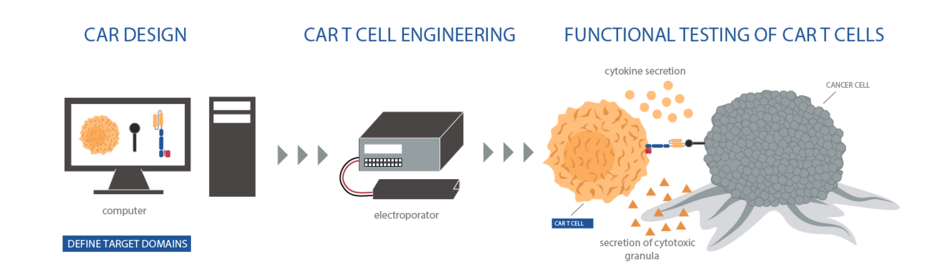
CAR conception and design are done using specialized software. The genetic information encoding the CAR is introduced into T cells by either viral or non-viral gene transfer, for example by using an electroporator. Subsequently, a series of experiments is conducted to test the functionality of the engineered CAR T cells. This functional analysis includes tumor cell lysis, cytokine secretion and T cell proliferation.
Clinical application
From bench to bedside
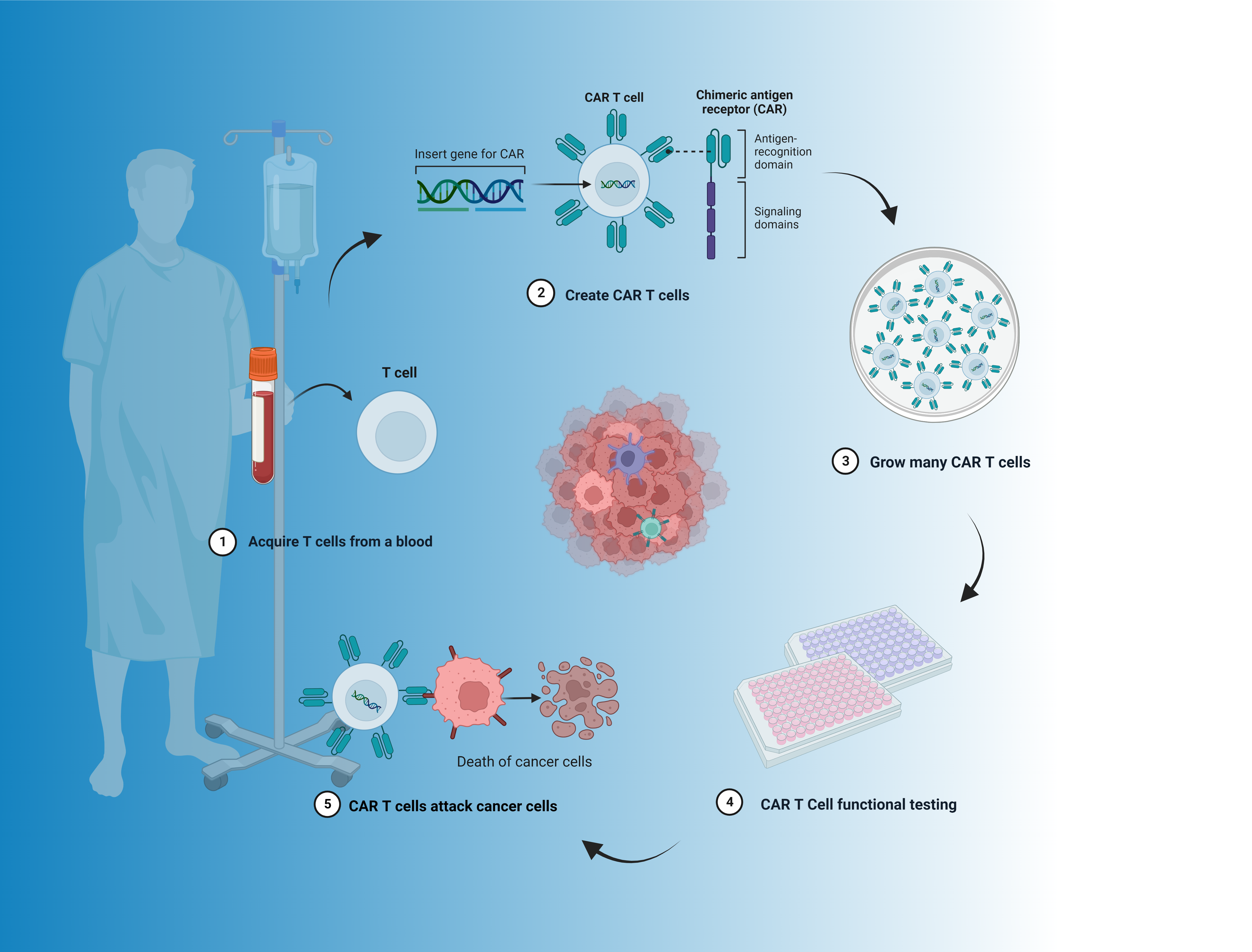
To produce therapeutic CAR T cells, a patient’s white blood cells are harvested in a process called leukapheresis (1). The sample is separated or enriched for the appropriate T cells (2), the gene sequence for the CAR construct is inserted into the T cell’s DNA (3), and modified T cells are expanded ex-vivo (4). Cells can then be infused back into the patient (5). Once infused, the modified T cells are designed to multiply when they encounter the targeted proteins and to kill the targeted cancer cells. In addition, memory CAR T cells can prevent recurrence..

How are CARs designed?
Combining bioinformatics tools with
real life experiments
CAR conception and design are done using specialized software. The genetic information encoding the CAR is introduced into T cells by either viral or non-viral gene transfer, for example by using an electroporator. Subsequently, a series of experiments is conducted to test the functionality of the engineered CAR T cells. This functional analysis includes tumor cell lysis, cytokine secretion and T cell proliferation.
Clinical application
From bench to bedside
To produce therapeutic CAR T cells, a patient’s white blood cells are harvested in a process called leukapheresis (1). The sample is separated or enriched for the appropriate T cells (2), the gene sequence for the CAR construct is inserted into the T cell’s DNA (3), and modified T cells are expanded ex-vivo (4). Cells can then be infused back into the patient (5). Once infused, the modified T cells are designed to multiply when they encounter the targeted proteins and to kill the targeted cancer cells. In addition, memory CAR T cells can prevent recurrence..
