
First Patient in the LION-1 Trial Receives ROR1-Targeted CAR-T Cell Therapy
As part of the Phase I clinical trial LION-1, the first patient has now been treated with the newly developed investigational therapy. Over the course of the study, up to 46 patients will receive modified immune cells (T cells) engineered to target the protein ROR1, which is expressed on tumor cells in several cancer types. Equipped with this receptor, the T cells are designed to recognize and eliminate malignant cells.
The study is being conducted at the newly established Clinical Trial Center of the NCT WERA, which is affiliated with the Early Clinical Trial Unit (ECTU) led by Dr. Maria-Elisabeth Goebeler. The study team oversees the complex operational workflow and coordinates the clinical departments from which patients are referred. Principal investigator of the LION-1 trial is Prof. Hermann Einsele, Director of the Department of Medicine II at University Hospital Würzburg and spokesperson of NCT WERA.
The National Center for Tumor Diseases (NCT) is a long-term collaboration between the German Cancer Research Center (DKFZ), leading university medical centers, and additional research partners across several sites in Germany.
First CAR-T Cell Study Worldwide for Adrenocortical Carcinoma
Prior to treatment, autologous T cells were collected from the patient and engineered at the Fraunhofer Institute for Cell Therapy and Immunology (IZI) in Leipzig to express a chimeric antigen receptor (CAR). The therapy has now commenced: the reprogrammed cells are being reinfused into the patient’s bloodstream, where the ROR1 CAR-T cells are expected to recognize and destroy the cancer cells. The patient has advanced adrenocortical carcinoma and has exhausted standard treatment options. “This is the world’s first CAR-T cell trial for this rare malignancy of the adrenal cortex,” explains treating endocrinologist Prof. Martin Fassnacht.
LION-1 Study to Assess Treatment Tolerability
Prof. Sophia Danhof, specialist in internal medicine and Professor of Cellular Immunotherapy of Malignant Diseases, leads the clinical treatment and outlines the study objectives:
“We aim to determine how patients tolerate this novel therapy—what side effects may occur, and which dose is appropriate. At the same time, we are looking for early, cautious signs of clinical activity, such as reductions in tumor burden, improvements in patient condition, or measurable immune responses.”
The trial includes two patient cohorts: one with hematologic malignancies such as mantle cell lymphoma and chronic lymphocytic leukemia, and another with solid tumors such as ovarian, breast, or adrenocortical cancer. Up to 23 patients are planned per cohort. “To reach this number, additional sites beyond Würzburg will be involved,” notes Prof. Danhof. After the initial sentinel participants for dose escalation, the NCT sites in Berlin and Cologne will begin enrolling patients. The sites in Erlangen, Regensburg, and Augsburg will refer patients within the WERA alliance.
ROR1 as a Promising Target for Hard-to-Treat Tumors
Establishing a therapy with ROR1 CAR-T cells would represent a major milestone, as it could benefit patients with solid tumors—an area where CAR-T cell therapy has so far shown limited success.
“ROR1 is a highly promising target because it is expressed on many tumor types while being rare in healthy tissues,” explains Prof. Michael Hudecek, sponsor representative of the study. His research group at the University Hospital Würzburg developed the ROR1-specific CAR-T cells used in the trial.
Experienced Partner for Patient-Specific Manufacturing
Clinical production of the investigational CAR-T cell products for LION-1 is carried out at Fraunhofer IZI in Leipzig under Good Manufacturing Practice (GMP) conditions. Fraunhofer IZI has extensive expertise in the manufacturing of CAR-T cell therapeutics and contributed to the preclinical development of the ROR1 therapy.
Within the institute’s GMP cleanrooms, patient-specific immune cells are isolated and enriched, followed by stable integration of the genetic information encoding the novel CAR receptor. The engineered cells are subsequently expanded over several days. Unlike currently approved CAR-T therapies, the LION-1 manufacturing process uses the virus-free Sleeping Beauty transposon system.
After comprehensive quality testing and pharmaceutical release, the CAR-T cell product is returned to the clinical site for infusion. Manufacturing of the product for the second patient has already been completed, enabling treatment to begin shortly.
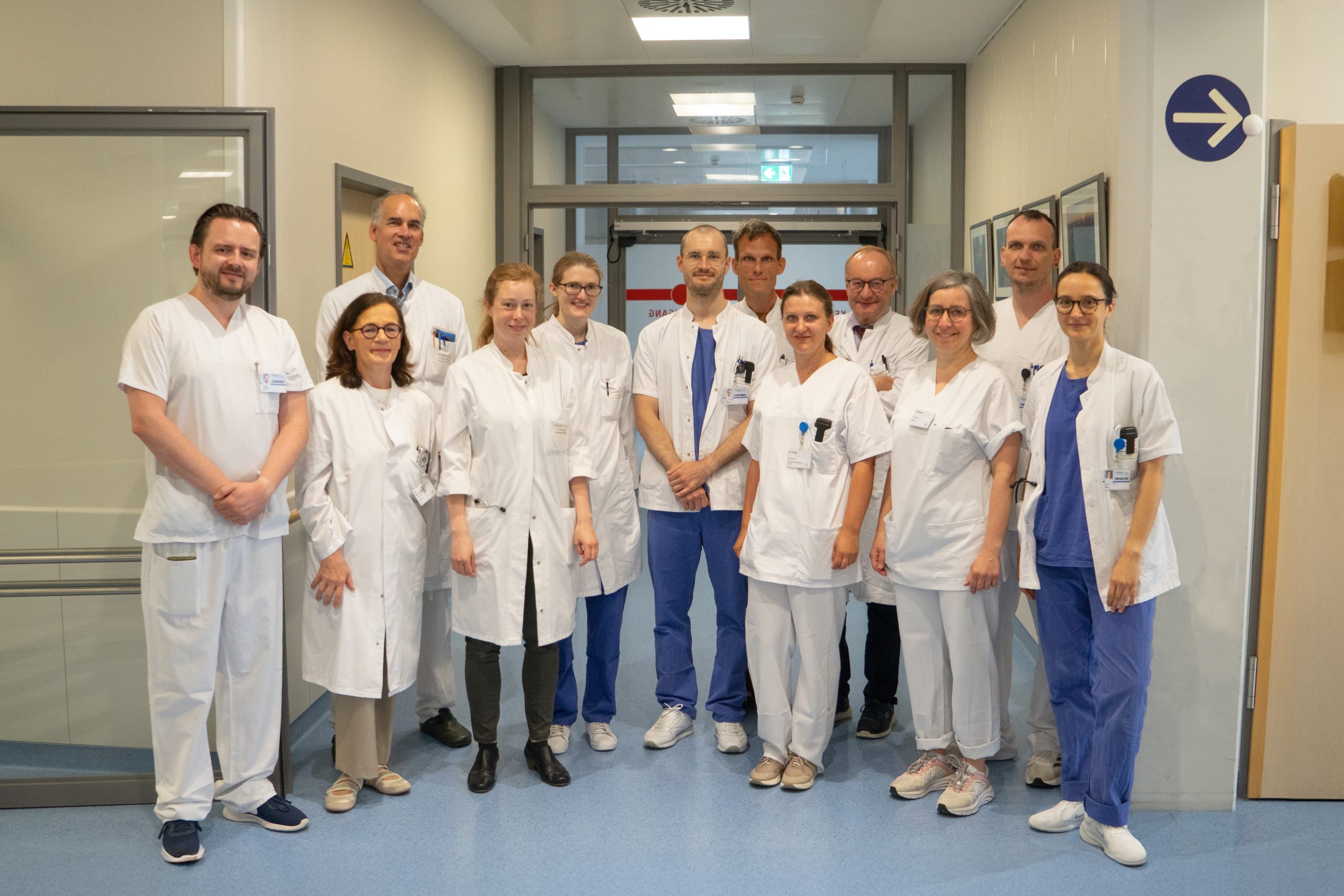
The team of the newly established Clinical Trial Center of NCT WERA, which is affiliated with the Early Clinical Trial Unit (ECTU), is responsible for the complex execution of the study. In the photo (from left to right): Simon Elsner, Dr. Maria-Elisabeth Goebeler, Prof. Martin Fassnacht, Prof. Sophia Danhof, Dr. Jessica Peter, Dr. Lukas Scheller, PD Dr. Jochen Frietsch, Anna Krug, Prof. Hermann Einsele, Sylvia Brand, Martin Kümpel, Prof. Carmina Fuß. © Christina Borschein / UKW
